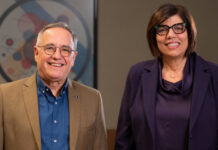

The opening of a new academic year is always an image of what the institution is experiencing. This time too, the opening of the Sophia University Institute’s A.A. 2024/2025 did not break the rule. It might seem strange that the year is inaugurated halfway through. However, it is not. It happens. The reasons, by the way, were more than valid: to find a date that would be convenient for the presence of the new Grand Chancellor, the Archbishop of Florence, Gherardo Gambelli, and the Vice Grand Chancellor, Margaret Karram, President of the Focolare Movement. This year, however, it had been wisely decided to use the Institute’s Aula Magna and, given the Institute’s precarious situation, both for economic reasons and because of the number of students, to remain within the limits of a dignified but simple ceremony; solemn but without waste. This was to be in tune with what is lived, at least externally. Therefore, it was!

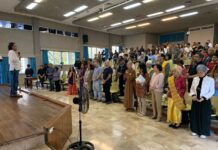
Obviously, nothing was lacking in the protocol and solemnity of the moment. It was a heartfelt ceremony attended by two hundred people and held a high tenor, academically speaking, and profound, if we consider the spiritual dimension that is never alien to Sophia’s life and thought. The speeches never lapsed into the whiff of ‘circumstantialism’. Far from it! They have always addressed what Sophia is experiencing with its criticalities, its challenges, but also its prospects and achievements always well beyond appearances.

Don Gherardo, as many still call him in Florence, although he has been bishop for almost a year now, was keen to emphasize that ‘among the objectives of the Institute is that of “promoting dialogue between cultures in the concreteness of social life, giving impetus to the inner, intellectual and social growth of people in a dynamic of reciprocity”’. He captured Sophia’s true aspiration in the centre. Margaret Karram was sincere in the face of the difficulties of the present, without ever renouncing the prophecy of this academic and educational experience. The rector himself articulated his expectations and wishes for the future. Very incisive and, in particular, linked to the specificity of our small university was the theme chosen for the evening: Dialogue, Religions and Politics. It was on these three dimensions that Prof. Fabio Petito, an Italian academic working in Sussex (England), gave his speech. I was greatly impressed by his willingness to accept an invitation I had communicated to him two weeks earlier. I honestly do not know how many would have done it. Not only that; the next morning Fabio – we have been friends as well as colleagues for about fifteen years – gave a lecture for about twenty-five students and professors. He is a keen observer of the issues he dealt with, and he did so in a way that was clear and accessible to all, even to those who might not exactly be described as well versed in this topic.

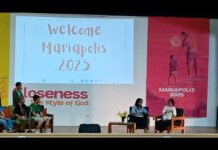
However, the moment in which all of Sophia’s prophetic capacity emerged was during the dialogue – it was the first time it had ever taken place – between some students and the authorities who had just spoken. In this regard, I really liked what my friend and colleague Tamara Pastorelli wrote about it: ‘The dialogue, started from the personal stories of the young people from the Holy Land, the Philippines, Argentina, Kosovo, Sierra Leone and Peru. They touched on themes of global importance and burning topicality: the value of grassroots diplomacy for conflict resolution and the search for peace; the commitment to a fairer and more equitable economy, with the experience of Economy of Francis. This was followed by the role of young people from the Mediterranean in building a culture of encounter and the value of reconciliation and inter-religious dialogue, particularly between Christians and Muslims with the experience of Wings of Unity. Another point were the hopes of young Africans involved in the project, initiated by Sophia alumni, called Together for a New Africa, aimed at change and the common good of their continent and, finally, the anxieties and fragilities of young people in search of a vocation and fulfilment in the globalized world emerged with clarity. The Grand Chancellor and the President of the Focolare as well as the Rector gave fine responses. Nevertheless, it clearly emerged the profound, courageous and by no means taken for granted fruits of a human, academic and spiritual journey matured by the students: young and not so young.

Of course, there was no shortage of refreshments: also homemade and … nevertheless … of a high standard. Two students who are preparing their theses told me at the end that they had never ‘experienced’ an opening of the Academic Year like this one: truly tailored to our institute and capable of expressing its true essence.